
Nasdaq’s five-day drop hints at a broader shift from tech leadership to cyclical sectors as investors watch AI, semiconductors, and earnings revisions.
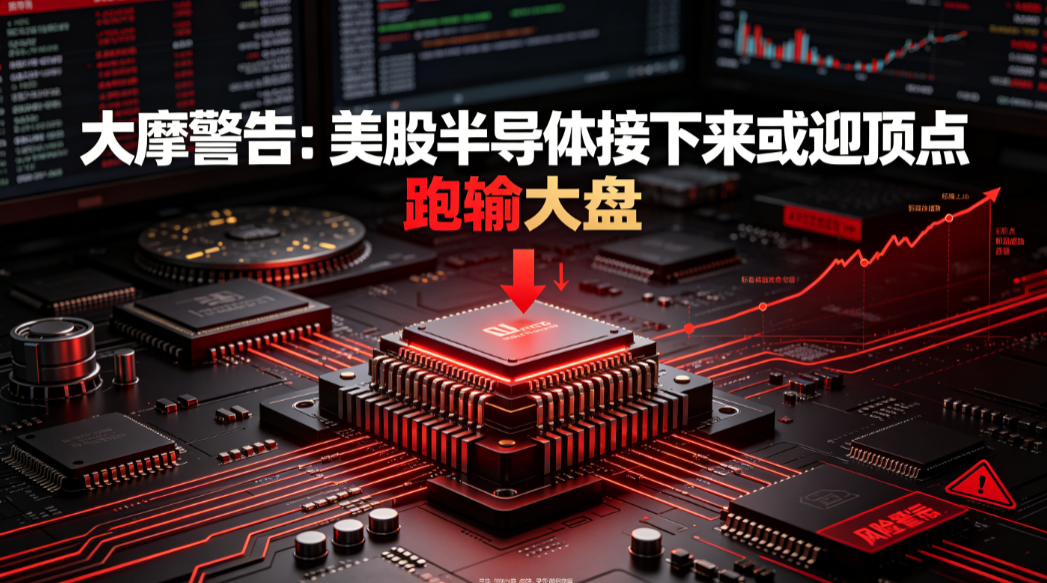
Nasdaq’s Five-Day Slide Signals a Deeper Shift in U.S. Equity Leadership
Keywords: Nasdaq Composite, sector rotation, artificial intelligence, semiconductors, Morgan Stanley, Michael Wilson, cyclical stocks, consumer discretionary, transportation, regional banks, market breadth, earnings revisions
Introduction
Last week, the Nasdaq Composite extended its decline to five consecutive sessions, marking the longest losing streak of the year and erasing 4.6% of its value over the period. The technology-heavy benchmark underperformed the broader S&P 500 by a wide margin, falling at more than twice the pace of the market index. On the surface, this may appear to be another short-term pullback in an index long defined by elevated valuations and concentration risk. In reality, however, the move may reflect something more consequential: a growing reassessment of artificial intelligence trade enthusiasm, and a broader rotation in market leadership away from mega-cap technology and toward sectors more tightly linked to the real economy.
According to recent analysis highlighted by MarketWatch, investors are becoming more cautious about the AI-led rally that has dominated U.S. equities over the past several years. At the same time, capital appears to be flowing toward cyclical industries that benefit more directly from economic resilience, improving earnings breadth, and a less restrictive macro backdrop. This shift matters because it suggests the market is not simply digesting volatility in a few large stocks; it may be repricing the relative attractiveness of entire sectors.
The End of “Buy Every Dip” in Tech?
For much of the past cycle, one of the most profitable strategies in U.S. equities was straightforward: buy technology stocks on weakness and wait for the next rebound. That approach was reinforced by the rapid rise of AI-related optimism, which lifted not only hardware and software names, but also the broad ecosystem of semiconductor companies, cloud providers, and platform giants. Investors grew accustomed to the idea that any dip in the sector represented a buying opportunity.
But that playbook may now be losing its reliability. Morgan Stanley’s chief equity strategist Michael Wilson and his team argue that investors need to be considerably more selective. Their view is not that technology has lost its long-term relevance, nor that the AI theme has exhausted itself entirely. Rather, they believe the market is entering a phase in which indiscriminate exposure to the sector carries greater risk, especially when valuations remain demanding and earnings expectations continue to look ambitious.
This warning is especially important in an index like the Nasdaq Composite, whose performance is heavily influenced by a relatively small group of mega-cap names. When leadership narrows, index-level volatility can rise even if the broader economy remains stable. The recent five-day decline may therefore be less a sign of systemic weakness than an indication that the market is reassessing which segment of the technology trade deserves a premium.
Sector Rotation: From Narrative to Fundamentals
One of the clearest signals in the recent market action is sector rotation. Investors appear increasingly willing to shift capital away from expensive growth assets and into industries with stronger ties to nominal economic activity, credit conditions, and consumer spending. This pattern often emerges when markets begin to believe that earnings growth outside the technology complex has been underestimated.
Wilson argues that the core driver of this rotation is the extent of earnings recovery across the market, which he believes had previously been underappreciated. In other words, the recovery is not solely about fading enthusiasm for tech; it is also about rising confidence in the earnings prospects of cyclical sectors. If that view is correct, then the recent rotation may have room to continue, especially if macro conditions remain supportive.
Several forces are feeding this shift. First, oil prices have been moving lower, which can ease pressure on transportation and consumer-sensitive industries. Second, the Federal Reserve may ultimately prove less hawkish than markets currently expect, reducing the tail risk of a more aggressive policy stance. Third, broader earnings revisions outside of megacap technology could continue to improve if economic growth remains resilient and inflation gradually moderates.
Together, these factors make sectors such as consumer discretionary, transportation, and regional banks increasingly attractive on a relative basis. These are not the market’s most glamorous names, but they are precisely the kinds of industries that tend to benefit when investors begin to prioritize breadth, valuation discipline, and earnings durability over purely thematic momentum.
Semiconductor Volatility Is Changing the Risk Profile
Among all the segments tied to the AI narrative, semiconductors may be the most important—and the most vulnerable. The sector has been one of the strongest beneficiaries of AI-related capital expenditure expectations, as investors priced in surging demand for chips, advanced packaging, data-center infrastructure, and high-performance computing.
Yet the recent volatility in semiconductor shares has been striking. The Philadelphia Semiconductor Index surged 7.3% in the week ending June 15, only to fall 7.9% the following week. Such sharp reversals underscore just how fragile consensus positioning can become when sentiment is crowded and expectations are elevated. For investors holding large allocations to the sector, the swings make it increasingly difficult to justify historical weighting levels.
This is where Wilson’s caution becomes particularly relevant. He notes that the sector’s recent weakness, combined with softening in the shares of major technology leaders, may be signaling a broader unwind in optimism. Semiconductor stocks are not only a proxy for AI enthusiasm; they are also closely linked to capital spending by the largest technology platforms. If investors begin to question the sustainability of that spending, or if the market decides earnings estimates were too aggressive, the sector could continue to lag.
Wilson also points to the breadth of earnings revisions as a warning sign. When revision breadth approaches historical extremes, it often suggests that the market is running out of fresh upward surprises. In such an environment, even excellent companies can struggle to maintain momentum if expectations are already too high.
AI Is Still Important, But the Trade May Be Mature
It would be premature to argue that AI is no longer a transformative theme. The structural implications of AI for productivity, cloud infrastructure, software development, and enterprise spending remain substantial. Companies across the technology stack are still investing heavily, and the long-term competitive landscape is likely to change meaningfully as adoption broadens.
However, markets do not price long-term potential in a vacuum. They also price timing, magnitude, and expectations. That is why a powerful story can produce disappointing returns if the market has moved too far ahead of the underlying fundamentals. The question is no longer whether AI matters, but how much of that future has already been reflected in current share prices.
This distinction helps explain why some investors now view the semiconductor complex as resembling another “commodity-like” rally, comparable to silver, only delayed by several months. The implication is that the sector may still have upside in a longer cycle, but the most explosive phase of price appreciation could already be behind it. If so, the marginal buyer becomes harder to find, and the market transitions from enthusiasm-driven expansion to a more measured, valuation-sensitive phase.
Why Cyclicals May Benefit Next
If the technology trade is entering a period of digestion, then cyclical sectors may have the opportunity to outperform. Consumer discretionary stocks stand to gain if household spending remains resilient and inflation continues to cool. Transportation companies may benefit from stable freight volumes, improving demand visibility, and lower energy costs. Regional banks, meanwhile, could see relative support if recession fears remain contained and credit quality holds up better than expected.
These sectors also have one important feature in common: their performance depends more heavily on the broad economic cycle than on a single narrative theme. That makes them attractive in an environment where investors are searching for more balanced exposure. If the market begins rewarding earnings that are tied to everyday economic activity rather than to future-horizon growth assumptions, the leadership profile of the S&P 500 and Nasdaq could shift meaningfully.
This does not imply that all cyclical stocks are cheap or free of risk. Regional banks still face challenges related to funding costs, commercial real estate exposure, and tighter regulation. Consumer discretionary firms must contend with uneven wage growth and selective consumer behavior. Transportation stocks remain sensitive to fuel prices and global trade patterns. Yet relative to a richly valued technology complex, their risk-reward profiles may now appear more balanced.
Conclusion
The Nasdaq’s five-session decline is not simply a technical event; it is a market signal. It suggests that investors are becoming more discerning about AI-related exposure, more sensitive to semiconductor volatility, and more willing to rotate toward sectors with clearer links to macroeconomic improvement. The recent weakness in technology and semiconductors, combined with better prospects for cyclical industries, points to a market that is broadening out after a prolonged period of narrow leadership.
Michael Wilson’s message from Morgan Stanley is not that technology is finished, nor that semiconductors have lost all appeal. Rather, his assessment is that the market’s easy gains in the AI trade may be over for now, and that future performance will depend more on selectivity, earnings discipline, and relative value. In such an environment, investors may increasingly find opportunity in consumer discretionary, transportation, and regional banks—areas that could outperform if growth remains steady and policy becomes less restrictive.
Ultimately, the current rotation reflects a healthy but important adjustment. Markets that rely too heavily on a few dominant narratives are vulnerable when expectations become stretched. A broader, more diversified leadership structure would not only reduce concentration risk; it could also signal that the equity rally is becoming more durable. For now, the message from the Nasdaq appears clear: the market is no longer rewarding technology exposure indiscriminately, and the next phase of performance may belong to the sectors that were overlooked while AI was in command.